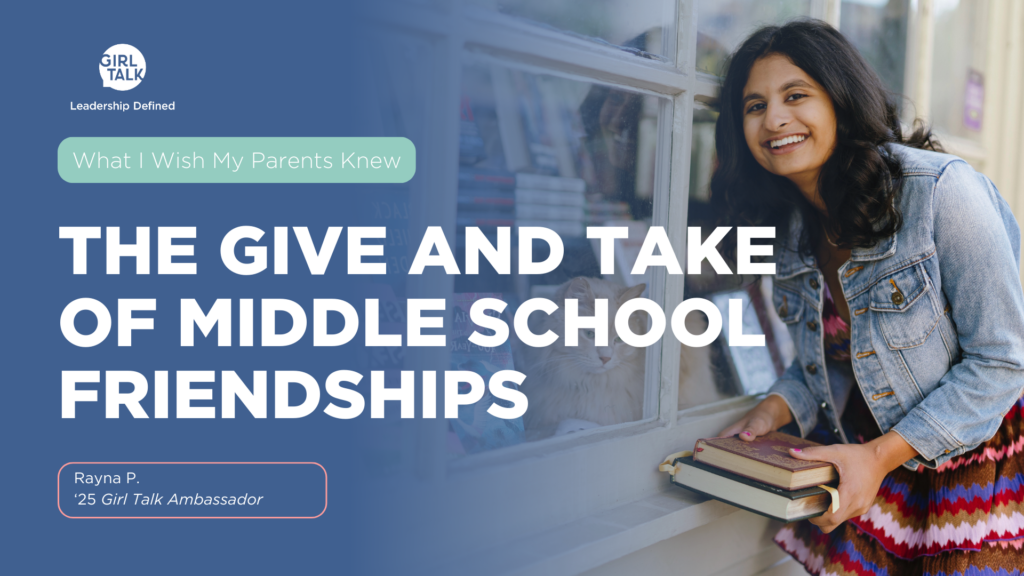
The Give and Take of Middle School Friendships: What I Wish Parents Knew
I vividly remember being a tender seventh grader coming home in tears. During my drama class, a random group of girls had taken the time to criticize and make fun of my body hair. Choruses of “just shave it” and other unnecessary and quite frankly hurtful comments sprung throughout the room. Up until this point, I hadn’t given much thought to actually growing up and molding into my (still trying) 18 year old adult-ish self. At that point in my life, my body just was. I was neutral, not in love with it but also not in a place where I was discontent with myself and the way I looked. I am definitely more of a sensitive person, so I left the room bawling straight to the bathroom.
Now, imagine my mom seeing me come home in this state. Neither of us really knew what to do except try to ignore the hurtful comments and try to become better at standing up for myself next time. Trying to navigate the friendship dynamics of middle school is a daunting task and I wish adults were better equipped to handle this situation.
All too often, schools push the rhetoric of “standing up for yourself” and “telling a trusted adult” when trying to solve what seems like a million piece jigsaw puzzle. However, what’s less focused on is the correct way to stand up for yourself and more importantly, providing the support to do so. Middle school me (and to be fair, almost college me) still sometimes struggles with perspective. I know that many issues or friendship struggles will pass, but I continue to get hung on how these struggles are hurting me in the present. Middle school me felt that these issues would affect me for the rest of my life.
Raising resilient kids who are able to be secure and confident enough to be firm when boundaries are crossed is a hard thing to do. The first step is understanding what behaviors are unsafe and setting those boundaries to begin with. Taking the time to build a list of values and do work to find out who you are as a person will give you clear guidance on what you stand for and believe in as a person. This may seem like a big task to do, but starting to find activities you enjoy by volunteering with friends or joining a dance team can slowly pave the way to find the causes you believe in. Being an active listener is key in this process as well as young girls are forming their identity.
We all deserve to feel empowered, and parents deserve to know that we are forging the way and all we need is a little push to discover who we really are.
At Girl Talk, we recognize the strong connection between education and advocacy, and how when combined, they amplify the power of leadership. Through this blog series, Girl Talk Ambassadors are using their voices to spark important conversations. Each article in this series is an opportunity to bridge generations and encourage understanding between young leaders and adults.
As you reflect on Rayna’s insights, we challenge you to take action: start conversations with the adults or young people in your life and continue advocating for the change you want to see. Your voice is a powerful tool for leadership, and together, we can create a more supportive and informed community for all girls to thrive.